Taking Time Out
Why the Busiest Moment Is the Right Time to Step Back

There’s a part of leadership that doesn’t get talked about enough.
It doesn’t happen when things fall apart, and it doesn’t wait for performance to drop. It arrives earlier than that, when everything still appears to be working but something feels slightly off.
I remember sitting on the island of Madeira, laptop open in front of me, the Atlantic stretching out beyond the horizon. My family were nearby, enjoying the beach, doing what families do when time finally slows down.
I was working, but not in the way I used to. There was no pressure, no urgency, no constant internal dialogue telling me I should be doing more. My shoulders had dropped, the tension had gone, and for the first time in a while I could think clearly again.
What stood out wasn’t where I was. It was what I wasn’t feeling.
Clarity returned.
Energy reset.
And when I came back into the business, I operated differently.
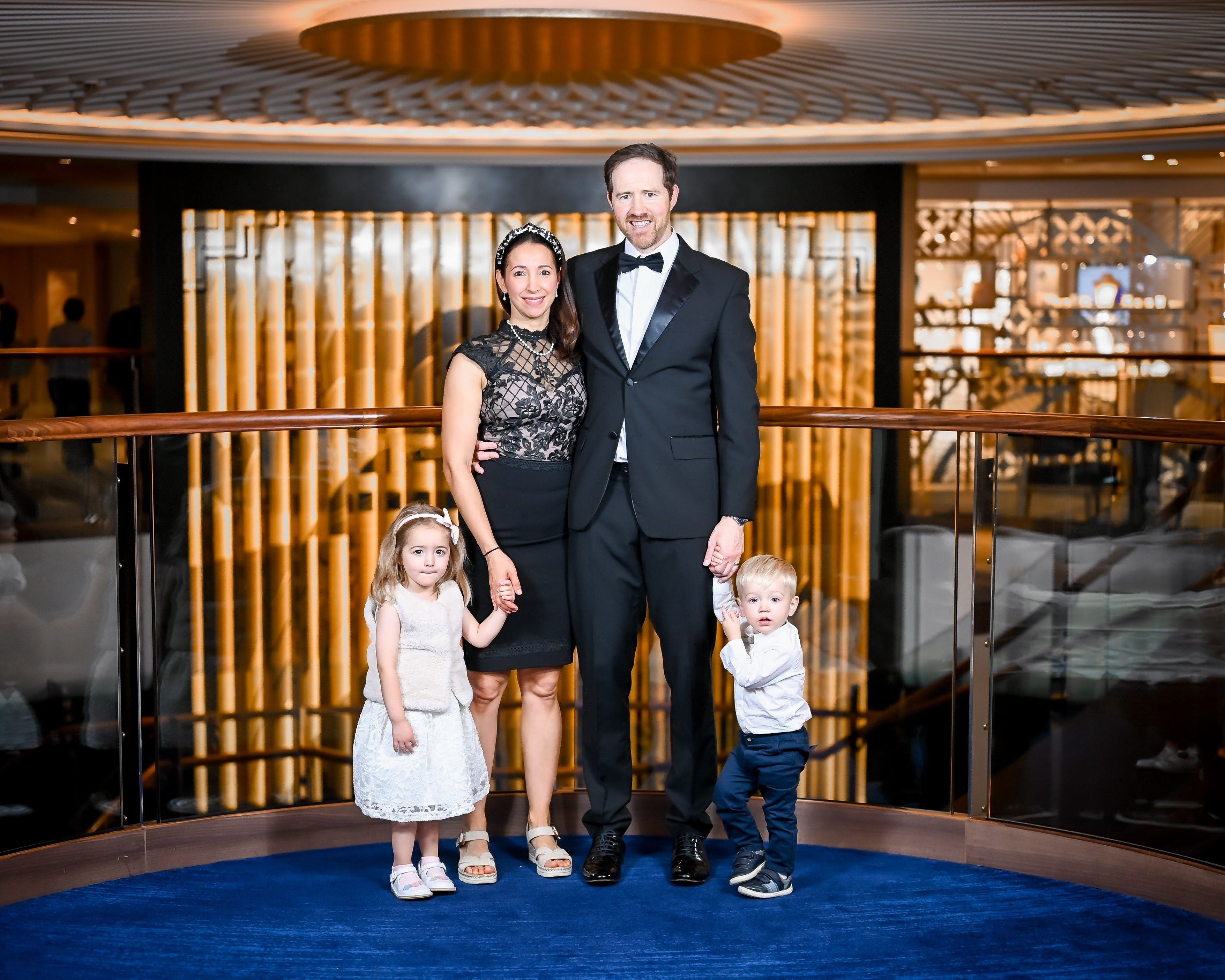
On paper, I shouldn’t have been there.
The business was just over 18 months old. Demand was high, momentum was building, and by traditional thinking this was the moment to stay put and push harder.
That’s exactly what I would have done earlier in my career.
For years, I worked six and a half days a week. Friday afternoons were the only exception, and even then I rarely switched off properly. I didn’t take a meaningful holiday for five years.
At that stage, I wasn’t leading large teams. I was proving myself. Coming through the late 90s and early 2000s, particularly in retail, the expectation was simple: if you want to get on, you work.
More hours. More visibility. More sacrifice.
Looking back, I can summarise that version of myself in one line.
An obsessive workaholic.
At the time, it felt right. I believed I was demonstrating commitment, and that I was building something. I believed I was doing it for the future.
What I misunderstood was what leadership actually requires.
I thought it meant always being there; visible, available, constantly working. In reality, that approach creates a very different outcome.
It holds people back. When you operate at that level of intensity, others assume that’s the standard, not because you tell them, but because you show them. Most people can’t, and shouldn’t, operate that way, which limits their growth and reduces their willingness to step forward.
It also reduces your own effectiveness. Decisions are made quickly, but not always clearly, and over time the quality of thinking begins to narrow without you noticing.
There were personal consequences as well.
I was in a relationship that had started at school, and we had a daughter together. By the time she was turning five, things had already shifted. Not suddenly, but gradually, I had moved in one direction while everything else was left behind.
I was focused on working, building, and delivering what I thought I needed to provide. Ironically, I achieved much of what I set out to do, but the cost had already been paid.
The relationship didn’t last.
It worked out in the end. We both moved on and built different lives, and my daughter and I have a strong relationship today. But that period shaped how I think about leadership more than anything else, because it showed me something I didn’t understand at the time.
Relentless effort isn’t always strength. Sometimes it’s a lack of perspective.
Later in my career, as responsibility increased and I became accountable for larger teams, my thinking shifted. Leadership stopped being about how much I could carry and became about what I enabled.
That was when I started to step back, take time out, and lead by example in a different way.
The change didn’t make me less effective. It made me significantly better, because I was no longer operating entirely from inside the pressure. I could see it, rather than simply react to it.
This is something I now see consistently in my coaching work.
The leaders I work with such as doctors, lawyers, CEOs & founder, are not lacking in capability. They often have strong systems, capable teams, and significant experience. The issue is rarely whether they can take time out.
It’s whether they are willing to.
There is always a reason not to.
“I’m doing it for my family.”
“I need to be there.”
“This isn’t the right time.”
Each of those statements contains truth, but together they create a pattern. The moment when leaders most need to step back is usually the moment they feel least able to do so.
Pressure narrows perception. Urgency replaces reflective thinking, and everything begins to feel important, even when it isn’t. Decisions become reactive rather than intentional, and over time the gap between what matters and what gets attention begins to widen.
If that continues, the consequences don’t always show up dramatically. It isn’t necessarily burnout.
It’s something quieter.
Clarity drops. Energy drains. Relationships receive less attention. The quality of thinking reduces before performance does, which makes it harder to recognise what’s happening.
This is why taking time out is not about rest. It’s about perspective.
When I was sitting in Madeira last November, working calmly while my family played, I wasn’t discovering something new. I was confirming what experience had already taught me: stepping away works.
Clarity returns.
Energy resets.
And decisions improve.
In the work I do now, I don’t tell people to take time out. I help them understand why it matters, because once they see it clearly, the decision becomes far easier to make.
This is where coaching plays its role… not as instruction, but as perspective.
When you’re in the waves, you can’t see the coastline. Everything feels immediate, close, and important. A coach creates distance, slows the thinking, and helps separate identity from action so that leaders can see what is actually happening rather than what it feels like.
Through The Elevation Model™, that shift becomes structured: awareness leads to insight, and insight leads to intentional action.
If you recognise yourself in this, the answer isn’t to overhaul everything.
It’s to pay attention to the signal.
When clarity drops, when everything feels urgent, when thinking becomes compressed, that isn’t the moment to push harder. It’s the moment to step back.
If you want to explore this further, I’ve written more here:
Taking Time Out: Why Strategic Stillness Strengthens Leadership Performance
There’s also a short video version of this reflection, which captures the same idea from a different angle.. as I wander through the streets of Manchester.
Find that below:
Why Taking Time Out Makes You a Stronger Leader
Leadership isn’t defined by how much you can carry.
It’s defined by how clearly you can see.
And sometimes, the clearest thinking only returns when you give yourself the space to stop.
Thankyou for this.I agree.I also think that change of environment that you are used to once in a while is good for mental health..Stepping back and slowing down brings not only clarity but also organizes your mind in a functional way and bring back the right motivation with new energy.
Very good 👍🏼